Euroseeds 2025 InnovAction Stage runner-up turns an overlooked insect into a precision pollination tool for the seed sector.
This week, Seed World Europe is featuring the third, second and first place winner of Euroseeds InnovAction Stage 2025. Today we are featuring second place winner Polyfly.
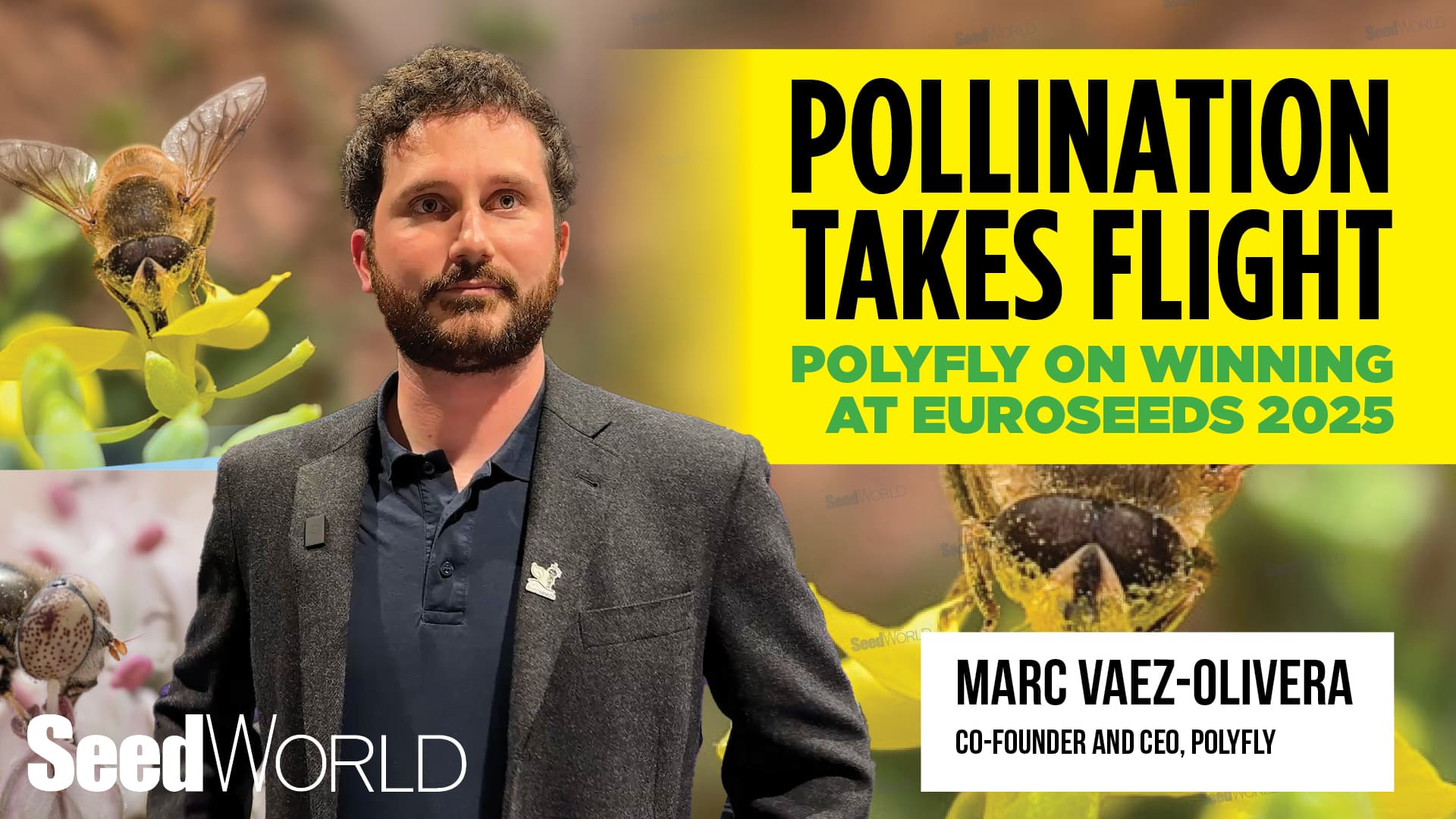
For decades, managed pollination has rested comfortably on the backs of bees. Reliable, familiar and iconic, they became the default solution in seed production systems across the globe. But what happens when that one-size-fits-all model starts to show its limits? When Polyfly took second place on the Euroseeds 2025 InnovAction Stage, it wasn’t just recognition for a clever biological workaround — it was a signal that pollination itself is being rethought. By industrializing the mass rearing of hoverflies, Polyfly is opening a new chapter in managed pollination, offering breeders and seed producers a flexible, resilient and surprisingly elegant alternative. In this interview with Marc Vaez-Olivera, CEO of Polyfly, he explains why flies may be the missing link in the pollination toolbox — and why the seed sector is starting to pay close attention.
Seed World Europe (SWE): Marc, could you describe in your own words what Polyfly does — what is the core idea behind using hoverflies as pollinators — and what motivated you to develop this approach?
Marc Vaez-Olivera (MVO): Polyfly is the fruit of a shared vision between Yelitza Velásquez, a Venezuelan entomologist who came to Spain for her PhD, and myself, a French engineer. We founded the company in 2017, right when the ‘ento-industry’ was booming. At the time, mass-rearing beetles, crickets, and black soldier flies for food or feed was the big trend. However, Yelitza and I felt that market was becoming almost too ‘mainstream’ and recognized that the massive CAPEX required made insect protein a difficult mountain to climb. It was not the kind of entrepreneurial venture we wanted to pursue.
We were aware of research in Europe and Oceania aiming to use hoverflies as alternative managed pollinators. We loved the concept and quickly realized the real bottleneck wasn’t whether hoverflies could pollinate — they are excellent at it — but whether anyone could rear them at a scale that made them a commercially viable solution.
So, we rolled up our sleeves. We wanted to demonstrate that while honeybees are iconic, they aren’t the only pollinators out there, and certainly not the only ones that should be made available to growers. Our goal was to provide an extra tool in the ‘pollination toolbox’ for growers facing deficits due to environmental factors and/or the limitations of traditional pollinators. For many crops, pollination is the single most powerful lever to increase yield and quality, yet it remains understudied. Nine years later, we are proud to be officially introducing this new class of managed pollinators across different continents.
SWE: Why do you believe hoverflies meet a real need in agriculture / seed production — what challenges in traditional pollination are you addressing, and how does your solution improve on existing methods
MVO: We believe hoverflies meet a critical need because the agricultural industry has historically over-relied on a very narrow set of managed species (i.e., the European honeybee, Apis mellifera, and the buff-tailed bumblebee Bombus terrestris). While honeybees and bumblebees are great, they aren’t ‘one-size-fits-all’. As some researchers previously recognized, flies are the ‘other’ major pollinators. Some species are very common, effective, yet largely ignored in both scientific literature and commercial practice.
In seed production specifically, we are addressing several challenges where traditional pollinators can fall short:
- The ‘cage stress’ factor: in breeding isolations and insect-proof seed production tunnels and greenhouses, bees often struggle with orientation and flight ability. This leads to inconsistent results and can become a management headache for breeders and growers. Hoverflies (like Eristalis tenax, aka Queenfly) do not suffer as much in these confined environments. The release density can be precisely adjusted, and because hoverflies are naturally resilient to these conditions, they remain focused on the flowers, resulting in significantly more reliable cross-pollination.
- Environmental resilience: bees tend to be more sensitive to temperature and light; they may stay in the hive during cloudy, windy, or cooler periods. Conversely, during summer heat waves, they may stop pollinating to focus on ventilating the nest. Hoverflies, however, have a broader ‘operating window’. Depending on the species, they are active in lower light and more diverse temperatures, which is essential for ensuring that pollination doesn’t stop just because the weather isn’t ideal.
- Floral discrimination and safety: some crops are simply not very attractive to bees, or their flower morphology makes it difficult for them to work effectively. Hoverflies have lower floral discrimination and hairy bodies, which can make them excellent at transporting high pollen loads across a wide variety of flower types and shapes. Plus, they do not sting, which makes the working environment much safer and easier for personnel in greenhouses and tunnels.
Our innovative pollination solution improves on existing methods by taking the ‘potential’ identified by researchers as far back as the 20th century and turning it into a commercially viable, industrial-scale reality. We provide ‘on-call’ pollinators that complement traditional methods. It’s not about replacing bees; it’s about providing that missing, well-adapted solution in the grower’s toolbox to ensure yield consistency and seed quality, no matter the conditions.
SWE: What makes Polyfly’s approach particularly innovative compared to other pollination solutions (e.g. bees, mechanical pollination, other methods)?
MVO: To understand why Polyfly’s approach is innovative, we have to look at the history of pollination as a series of major milestones. For centuries, we relied on wild pollination. In the 20th century, we moved into managed Hymenopterans, where bees and bumblebees became the standard across the globe. Now, we believe we are opening a new chapter of pollination: managed Dipterans (focusing on hoverflies rather than blowflies, which are often considered synanthropic pests).
Our innovation is not just ‘using a fly’; it is the industrialization of the mass-rearing process. While researchers have known about the potential of hoverflies for decades, Polyfly is the first company globally to bridge the gap between academic theory and commercial reality. Our breakthrough lies in three key areas:
- Industrial-scale rearing: The real innovation is our ability to mass-produce species like Eristalis tenax (aka Queenfly) and Eristalinus aeneus (aka Goldfly) at a scale that can service thousands of hectares. We have moved from small-scale laboratory colonies to a large-scale, automated industrial blueprint that ensures a continuous, reliable supply of pollinators year-round.
- Biological precision vs. mechanical pollination: Unlike mechanical solutions (e.g., drones or vibrators) that can be invasive, energy-intensive, or risk damaging delicate flower structures, hoverflies provide natural and precise ecosystem services. These insects are ‘wired’ to visit and forage flowers continuously in search of nectar and/or pollen, with a delicacy and efficiency that machines cannot yet replicate. Furthermore, hoverflies are a carbon-neutral solution that enhances ‘on-farm’ biodiversity rather than just performing a mechanical task.
- Logistical ‘on-call’ pollination: Traditional solutions like honey bee or bumblebee hives are ‘fixed’ biological units that usually require careful management. We provide hoverflies in pupa form. This is a massive shift in management: growers can release the exact number of pollinators they need, when they need them, without the logistical burden of transporting and/or maintaining a ‘live’ hive. It turns pollination into a scalable, high-precision input (much like a seed or a fertilizer).
Ultimately, what makes us unique is that we aren’t trying to ‘beat’ nature or ‘replace’ bees. Our innovation is about diversifying the suite of effective natural crop pollination solutions. By adding managed hoverflies to the agricultural landscape, we provide a level of resilience that simply didn’t exist before. We are giving growers a specialized tool for cropping systems and environments where traditional or mechanical methods may not be the optimal fit.
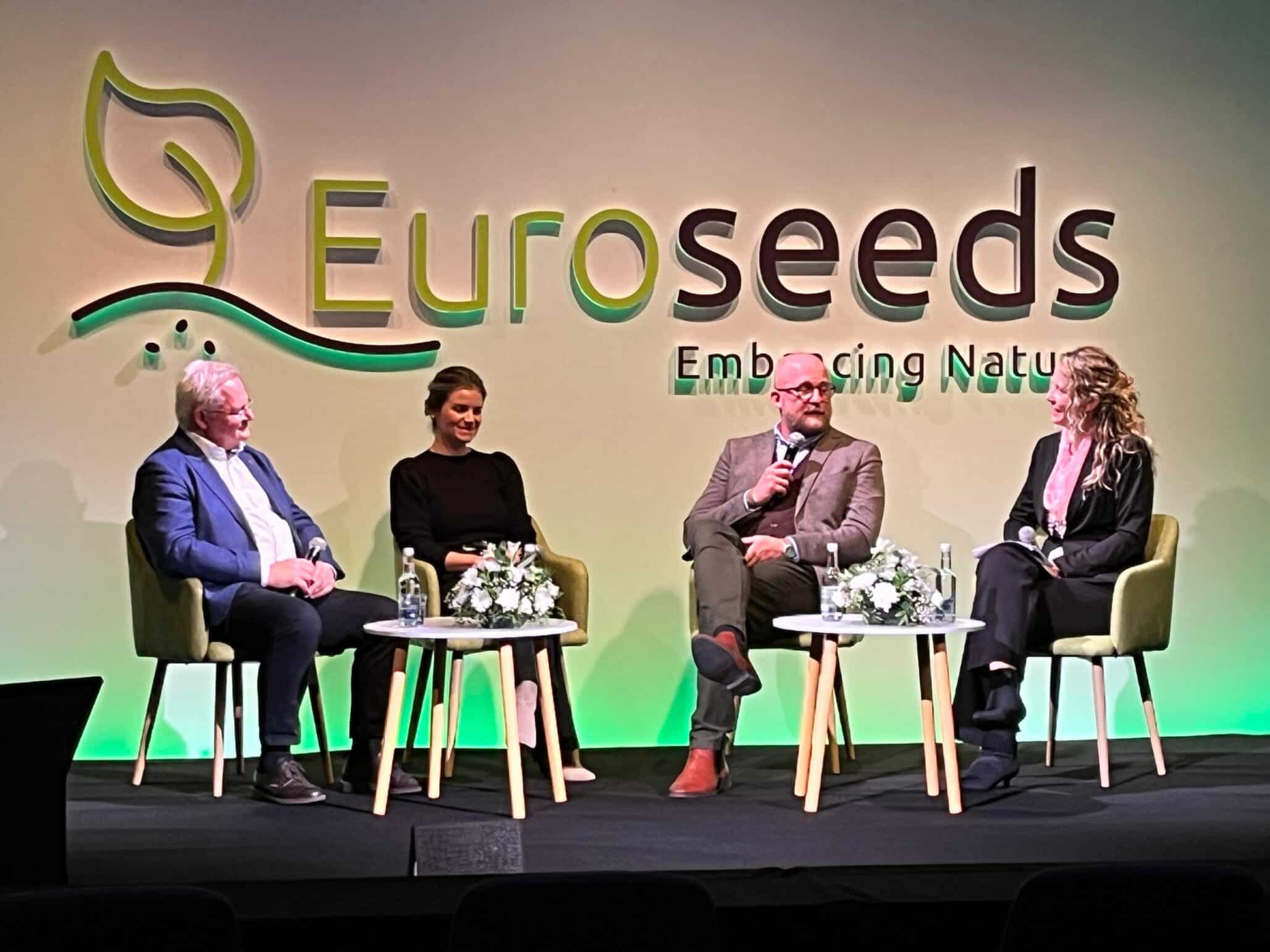
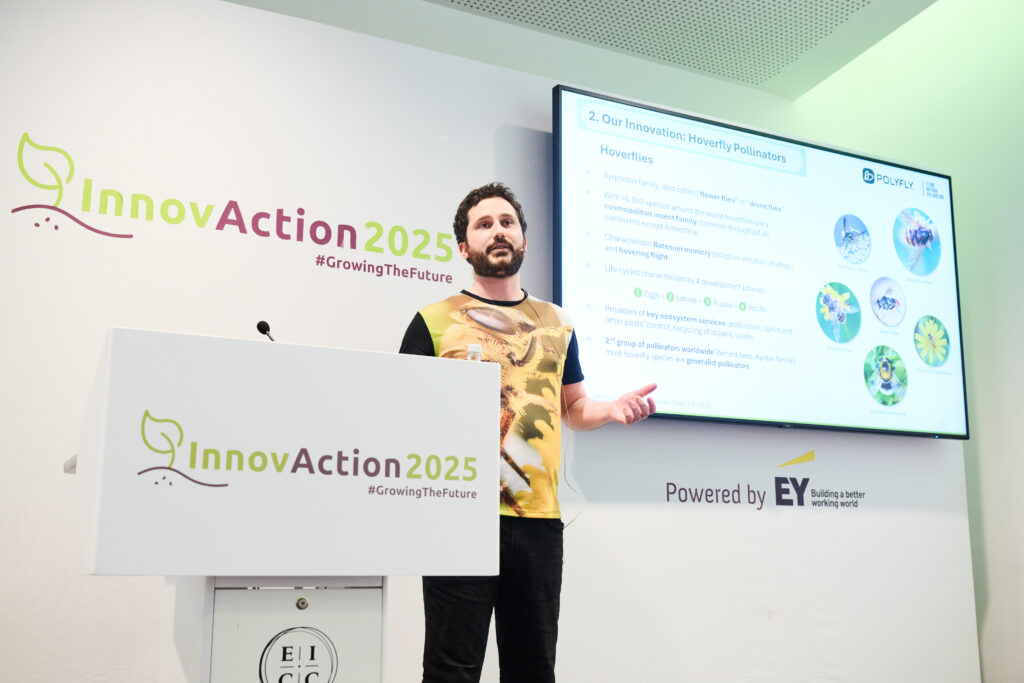
SWE: Being selected 2nd in the 2025 InnovAction Stage at the Euroseeds Congress is a big recognition. What does this award mean for Polyfly, and how might it influence your next steps (e.g. expansion, R&D, market rollout)?
MVO: Being recognized as the runner-up in the 2025 InnovAction Stage was a deeply meaningful milestone for Polyfly. It wasn’t just a trophy; it was a strong validation of our vision by a jury of experts in the seed industry. In our sector, ‘innovation’ is often synonymous with digital tools or genetics, so for a biological solution like ours to take center stage proves that the industry acknowledges the potential vital role of hoverfly pollinators in the modern agricultural chain.
This recognition directly influences our next steps regarding market rollout and credibility. It serves as an excellent ‘seal of approval’ that shortens the ‘trust cycle’ with major seed companies. For a breeder or seed grower to introduce a new pollinator into high-value breeding cages or production tunnels, they need absolute confidence. The recognition from the Euroseeds Congress provides that assurance, helping us accelerate our commercial expansion across Europe and into new territories.
Furthermore, we are not standing still in terms of R&D. The visibility gained in Edinburgh has opened doors to new collaborative projects focused on refining our pollination protocols. We are expanding our scope beyond protected environments to include open-field seed production and high-value commercial crops such as almonds, avocados, and berries. Our goal is to leverage solid scientific data to help growers determine the precise timing and density of hoverfly releases, accounting for crop varieties, the presence of other pollinators, and environmental conditions.
This award confirms that Polyfly is successfully transitioning from a ‘promising startup’ into a strategic partner for the seed industry. Our next step is to take this momentum and prove, hectare by hectare, that (managed) hoverflies are indeed a missing piece of the global food production puzzle.
SWE: Looking forward: what are your short- and long-term goals for Polyfly? For instance: which crops or regions are you targeting next, and how do you see hoverfly-based pollination evolving in the broader context of sustainable agriculture?
MVO: In the short term, our goal is to solidify the industrial foundations for global growth. We are currently ramping up capacity at our recently commissioned industrial facility and implementing automated systems to support a reliable, year-round supply. While we continue to strengthen our core seed segment in Europe, we have already begun a strategic international expansion into the Southern Hemisphere and beyond. This includes initiating sales for high-value crops like avocados, berries, and vegetable seeds in markets such as South Africa and Japan. Looking toward 2030 and beyond, we aim to become a ‘Global Pollination Reference’ through the ‘mastery’ of alternative pollinators.
In the broader context of sustainable agriculture, we see hoverfly-based pollination as a new chapter of managed natural pollination, where functional diversity replaces an over-reliance on any single species. Our vision is to provide a ‘pollination toolbox’ that thrives in a changing climate, leveraging the hoverfly’s resilience to ensure enhanced and more stable crop yields even under increasingly challenging environmental conditions.